T
TheGardenMaster
Guest
- Thread Author
- #1
Last updated: October 4, 2026
One section of the fence stays dark or green while the boards beside it look relatively dry. Redirecting the sprinkler is a useful first correction, but judge the result by whether fresh wetting stops and drying improves. The old stain may remain, and any existing wood damage needs a separate decision.
Start by watching where water lands during normal watering. Then follow it below that spot: does it run onto the lower rail, splash up from bare soil, or collect around the post?
Check the board face, lower rail, and post base separately. A correction that keeps spray off the boards may still leave the bottom wet, while better drying cannot restore wood that has already deteriorated.
Check whether the affected section gets a drying interval between watering cycles. A sprinkler can repeatedly wet the same boards before sheltered parts of the section have dried. A single storm followed by drying presents a different exposure pattern, although prolonged rain can maintain wet conditions too.
Look beyond the exposed board face. The lower rail, rail ends, and places where boards overlap supporting wood may dry differently from surfaces facing the sun. A face that lightens during the afternoon can therefore conceal a wetter contact area behind it.
Plants or stored items pressed against the fence can obscure those areas. Where the edge is crowded, the broader problems associated with crowded shared-fence boundaries help explain why inspection access and surrounding space deserve attention.
Choose a nearby comparison section with similar shade and airflow. Comparing shaded, sprinkler-wetted boards with a sunny fence across the yard tells you much less. If similarly exposed neighboring boards lose their fresh wet appearance while this patch is wetted again, recurring contact deserves priority. That observation helps identify the exposure problem; it does not establish whether the interior of the wood is dry.
Use the marks to choose where to watch for fresh water. A patch at sprinkler height, scattered droplet marks, or streaks running down the boards can suggest repeated face contact. Seeing droplets land in that same area during a normal cycle gives you stronger evidence than the stain alone.
An old stain may extend beyond today’s spray pattern. The head could have shifted, vegetation could now interrupt the spray, or wind could change where droplets land. Do not assume the current water route matches every mark already on the fence.
Green surface film is consistent with damp conditions, but appearance alone does not identify the organism or establish decay. Dark wood can reflect wetness, weathering, deposits, or biological staining. Color helps locate a suspect area but says little about remaining wood strength.
Near the bottom, muddy flecks suggest soil splash. Longer downward trails suggest water traveling over the face. Both can occur on the same board, especially when direct spray runs down and strikes exposed soil.
Before cleaning anything, note where the marks stop and where fresh wetting begins. A photograph from the same position preserves that distinction for the correction test. Cleaning first can erase useful evidence while leaving the water route unchanged.
Identify the first point of contact during normal sprinkler operation. Does the spray strike the boards directly, drift onto them intermittently, or hit nearby soil and splash upward? Those routes can leave overlapping marks but call for different follow-up checks.
Where access is available, inspect the rail side too. Water on the face can travel downward and reach the lower rail or collect at a board-to-rail contact. A wet rail does not automatically mean that water rose from the ground.
Inspect the board ends and visible post base independently of the spray-height patch. A shallow depression, wet debris, or soil and mulch touching the boards may keep the bottom damp after face contact stops. The post’s ground-entry area may remain wet even when boards above it look dry.
Distinguish deposited mud from missing soil. Splash leaves marks; runoff can carry soil away and expose more of a post or footing. If you see channels or a growing washout, soil washing out along the fence line is a separate problem requiring attention.
Direct spray and retained base moisture can coexist. Finding one does not exclude the other, and a wet base does not by itself prove an underground leak. Observe the accessible surface without digging around the footing or disturbing support.
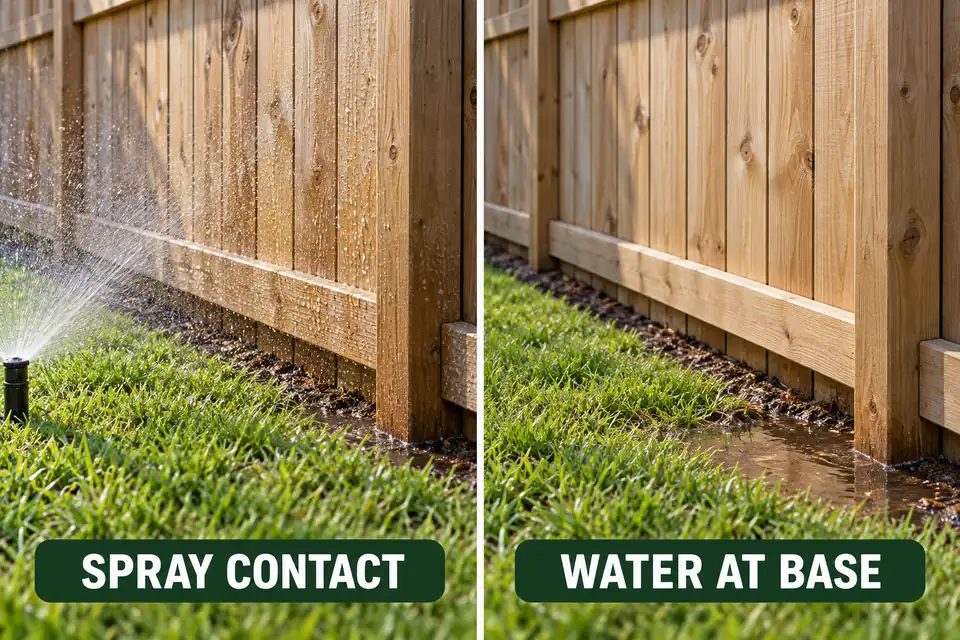
This distinction matters after redirection: keeping droplets off the boards does not necessarily stop irrigation water from reaching a low spot beside the fence.
Judge the correction by new water contact and subsequent drying, rather than by how quickly the discoloration fades. Keep the observations simple. Cleaning the fence or making several unrelated changes at the same time makes it harder to tell what the spray correction accomplished.
Less fresh wetting and improved drying support direct spray as a contributor. That remains a useful result even if the dark patch or green residue looks much the same. Persistent discoloration alone is no reason to keep adjusting a sprinkler that no longer reaches the wood.
A drier face with a persistently wet base changes the next step. Water may still collect there, wet material may remain against the wood, or another source may be involved. At that point, identifying the remaining drainage problem becomes more useful than further head adjustments.
If fresh droplets still reach the boards, direct exposure remains. If rain returns during the comparison, the result is less clear; observe again under comparable conditions rather than declaring success or failure from one visit.
A clear improvement establishes that the moisture exposure changed. Concealed rail ends, board backs, and the buried portion of a post still cannot be assessed from the drying of the visible face.
Visible loss of wood changes the decision more than persistent color does. An intact-looking stained surface is different from a spot with crumbling fibers or missing material, although neither appearance reveals the full condition beneath it.
Soft, friable wood, localized breakdown, and deteriorated material around an attachment warrant closer assessment. Ordinary surface checking or weathered fibers do not, by themselves, prove decay. Avoid trying to settle that distinction by forcefully probing the wood or pushing on a suspect fence.
Pay particular attention to lower rail ends and the post where it enters the ground. Damage confined to an individual board may allow a localized repair; deterioration in a supporting rail, post, or connection can affect the support of the section. A loose attachment also needs interpretation because fastening or joint problems can cause movement without decay.
Drying cannot restore missing wood or lost connection strength. If the section dries better but a rail end is breaking down, moisture correction is only part of the work. Have the affected component assessed before deciding the repair extent, since the visible patch may not show the full damage boundary.
Once fresh wetting stops, use the remaining evidence to choose the next action. Persistent base moisture needs further source investigation. Material breakdown needs component assessment. Lingering stain alone is a reason to keep observing the corrected section, not a sufficient basis for replacing it.
The USDA Forest Products Laboratory’s chapter on wood biodeterioration explains the moisture conditions that support fungal growth and the distinctions between staining and decay.
<p>The post Sprinklers That Keep Soaking One Section of the Fence first appeared on The Garden Scene.</p>
One section of the fence stays dark or green while the boards beside it look relatively dry. Redirecting the sprinkler is a useful first correction, but judge the result by whether fresh wetting stops and drying improves. The old stain may remain, and any existing wood damage needs a separate decision.
Start by watching where water lands during normal watering. Then follow it below that spot: does it run onto the lower rail, splash up from bare soil, or collect around the post?
Check the board face, lower rail, and post base separately. A correction that keeps spray off the boards may still leave the bottom wet, while better drying cannot restore wood that has already deteriorated.
Why Repeated Wetting Matters More Than One Storm
Check whether the affected section gets a drying interval between watering cycles. A sprinkler can repeatedly wet the same boards before sheltered parts of the section have dried. A single storm followed by drying presents a different exposure pattern, although prolonged rain can maintain wet conditions too.
Look beyond the exposed board face. The lower rail, rail ends, and places where boards overlap supporting wood may dry differently from surfaces facing the sun. A face that lightens during the afternoon can therefore conceal a wetter contact area behind it.
Plants or stored items pressed against the fence can obscure those areas. Where the edge is crowded, the broader problems associated with crowded shared-fence boundaries help explain why inspection access and surrounding space deserve attention.
Choose a nearby comparison section with similar shade and airflow. Comparing shaded, sprinkler-wetted boards with a sunny fence across the yard tells you much less. If similarly exposed neighboring boards lose their fresh wet appearance while this patch is wetted again, recurring contact deserves priority. That observation helps identify the exposure problem; it does not establish whether the interior of the wood is dry.
Reading the Stain and Algae Pattern
Use the marks to choose where to watch for fresh water. A patch at sprinkler height, scattered droplet marks, or streaks running down the boards can suggest repeated face contact. Seeing droplets land in that same area during a normal cycle gives you stronger evidence than the stain alone.
An old stain may extend beyond today’s spray pattern. The head could have shifted, vegetation could now interrupt the spray, or wind could change where droplets land. Do not assume the current water route matches every mark already on the fence.
Green surface film is consistent with damp conditions, but appearance alone does not identify the organism or establish decay. Dark wood can reflect wetness, weathering, deposits, or biological staining. Color helps locate a suspect area but says little about remaining wood strength.
Near the bottom, muddy flecks suggest soil splash. Longer downward trails suggest water traveling over the face. Both can occur on the same board, especially when direct spray runs down and strikes exposed soil.
Before cleaning anything, note where the marks stop and where fresh wetting begins. A photograph from the same position preserves that distinction for the correction test. Cleaning first can erase useful evidence while leaving the water route unchanged.
Overspray vs Water Collecting at the Base
Water arriving on the fence face
Identify the first point of contact during normal sprinkler operation. Does the spray strike the boards directly, drift onto them intermittently, or hit nearby soil and splash upward? Those routes can leave overlapping marks but call for different follow-up checks.
Where access is available, inspect the rail side too. Water on the face can travel downward and reach the lower rail or collect at a board-to-rail contact. A wet rail does not automatically mean that water rose from the ground.
Moisture remaining at ground level
Inspect the board ends and visible post base independently of the spray-height patch. A shallow depression, wet debris, or soil and mulch touching the boards may keep the bottom damp after face contact stops. The post’s ground-entry area may remain wet even when boards above it look dry.
Distinguish deposited mud from missing soil. Splash leaves marks; runoff can carry soil away and expose more of a post or footing. If you see channels or a growing washout, soil washing out along the fence line is a separate problem requiring attention.
Direct spray and retained base moisture can coexist. Finding one does not exclude the other, and a wet base does not by itself prove an underground leak. Observe the accessible surface without digging around the footing or disturbing support.
This distinction matters after redirection: keeping droplets off the boards does not necessarily stop irrigation water from reaching a low spot beside the fence.
What Changes After the Sprinkler Is Redirected
Judge the correction by new water contact and subsequent drying, rather than by how quickly the discoloration fades. Keep the observations simple. Cleaning the fence or making several unrelated changes at the same time makes it harder to tell what the spray correction accomplished.
- Record the starting condition. Photograph the affected face, accessible lower rail, and visible post base. Note recent rain and where sprinkler droplets land.
- Stop direct contact. Use the sprinkler’s intended adjustment. If that cannot keep water off the fence while serving the planting area, arrange a suitable correction rather than forcing the adjustment.
- Confirm the change during normal watering. Watch the next scheduled cycle to check that droplets no longer reach the fence. Do not repeatedly soak it for testing.
- Revisit the same locations. Look later in the drying period and before the next scheduled watering. Compare nearby similarly exposed wood and note changes in rain, wind, or sunshine.
Less fresh wetting and improved drying support direct spray as a contributor. That remains a useful result even if the dark patch or green residue looks much the same. Persistent discoloration alone is no reason to keep adjusting a sprinkler that no longer reaches the wood.
A drier face with a persistently wet base changes the next step. Water may still collect there, wet material may remain against the wood, or another source may be involved. At that point, identifying the remaining drainage problem becomes more useful than further head adjustments.
If fresh droplets still reach the boards, direct exposure remains. If rain returns during the comparison, the result is less clear; observe again under comparable conditions rather than declaring success or failure from one visit.
A clear improvement establishes that the moisture exposure changed. Concealed rail ends, board backs, and the buried portion of a post still cannot be assessed from the drying of the visible face.
When Surface Damage Suggests Deeper Decay
Visible loss of wood changes the decision more than persistent color does. An intact-looking stained surface is different from a spot with crumbling fibers or missing material, although neither appearance reveals the full condition beneath it.
Soft, friable wood, localized breakdown, and deteriorated material around an attachment warrant closer assessment. Ordinary surface checking or weathered fibers do not, by themselves, prove decay. Avoid trying to settle that distinction by forcefully probing the wood or pushing on a suspect fence.
Pay particular attention to lower rail ends and the post where it enters the ground. Damage confined to an individual board may allow a localized repair; deterioration in a supporting rail, post, or connection can affect the support of the section. A loose attachment also needs interpretation because fastening or joint problems can cause movement without decay.
Drying cannot restore missing wood or lost connection strength. If the section dries better but a rail end is breaking down, moisture correction is only part of the work. Have the affected component assessed before deciding the repair extent, since the visible patch may not show the full damage boundary.
Once fresh wetting stops, use the remaining evidence to choose the next action. Persistent base moisture needs further source investigation. Material breakdown needs component assessment. Lingering stain alone is a reason to keep observing the corrected section, not a sufficient basis for replacing it.
The USDA Forest Products Laboratory’s chapter on wood biodeterioration explains the moisture conditions that support fungal growth and the distinctions between staining and decay.
<p>The post Sprinklers That Keep Soaking One Section of the Fence first appeared on The Garden Scene.</p>