The Law — Key Ideas to Explore
Edition facts
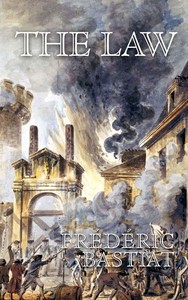
Frédéric Bastiat's The Law opens with a stark assertion: each person possesses God-given rights to individuality, liberty, and property. The essay then pivots to diagnose how law, meant to protect these rights, has been perverted into an instrument of legal plunder. Bastiat's argument unfolds through a series of contrasts—between justice and injustice, natural order and legislative artifice—and draws heavily on quotations from Rousseau and Raynal to illustrate the dangers of a legislator who would reshape human nature itself.
The Structure of the Argument
Bastiat organizes his essay as a logical progression from first principles to practical consequences. He begins by defining man's natural rights, then shows how law can be turned against them. The text moves from abstract definitions to concrete examples: tariffs, subsidies, progressive taxation, public schools, and welfare. Each example serves as a case of legal plunder, where the law takes from one group to benefit another. The structure mirrors a legal brief, with each paragraph building on the previous one. Bastiat frequently uses rhetorical questions to engage the reader, such as asking why Rousseau does not admit that nature could have guided men without a legislator. This methodical arrangement reinforces his central thesis that law must be limited to protecting individual rights.
Recurring Images of Nature and Artifice
Throughout the essay, Bastiat contrasts the natural order with artificial social constructs. He speaks of nature as invincible, regaining its empire when laws become enfeebled. The legislator, by contrast, is depicted as someone who would transform every individual, depriving man of his own powers to give him foreign ones. This imagery recurs in quotations from Rousseau, who describes the legislator as changing the constitution of man. Bastiat also invokes geographical determinism, citing Raynal's advice that laws must suit climate and soil. These references create a pattern: nature is self-regulating and wise, while legislative intervention is presumptuous and often destructive. The reader is left to weigh the organic development of society against the hubris of social engineering.
Movement Between Abstract Principle and Concrete Example
Bastiat shifts fluidly between philosophical statements and specific policy critiques. He opens with a declaration of natural rights, then immediately applies this principle to tariffs, subsidies, and minimum wage laws. The essay moves from the general—"the law has been perverted"—to the particular: protectionist tariffs, government jobs programs, usury laws. This movement gives the argument a persuasive rhythm, grounding abstract ideas in tangible grievances. Bastiat also uses historical examples, such as the Hebrews, Athenians, and Spartans, to illustrate how different societies have prioritized different objects of legislation. By alternating between theory and practice, he keeps the reader anchored while building a cumulative case against legal plunder.
The Role of Quoted Authorities
Bastiat incorporates extended quotations from Rousseau and Raynal to critique their views on legislation. He does not merely cite them; he interrogates their logic. For instance, after quoting Rousseau's claim that the legislator must transform human nature, Bastiat asks: "If Nature is sufficiently invincible to regain its empire, why does not Rousseau admit that it had no need of the legislator?" This technique turns the authorities against themselves, using their own words to expose contradictions. Similarly, Raynal's advice on matching laws to climate is presented as an example of overreach. Bastiat's handling of these sources reveals his method: he engages with opposing ideas directly, allowing the reader to see the flaws in their reasoning. The quotations are not decorative but functional, serving as foils for his own argument.
Readers approaching The Law should attend to how Bastiat weaves together principle and policy, nature and artifice. The essay rewards careful attention to its structure and the way it deploys quotations. Rather than a systematic treatise, it is a polemic that moves with urgency, each paragraph pressing the case that law must be restrained. Bastiat's voice is direct, his examples pointed, and his central distinction—between legal protection and legal plunder—remains a sharp tool for evaluating legislation.